
Medical coating for catheters
Eliminate catheter-related infections and increase patient safety with our bio-inspired coating technology

Passive, bio-based, anti-fouling barrier against pathogens and protein adhesion
Improved (dry) lubricity on any base material, but without PTFE, Si or PFAS.
Enhanced visibility to imprive ultrasound guidance interventions
.jpg)
Anti-fouling meets ultrasound visibility
For catheters requiring ultrasound-guided placement, the combined technology offers the best of both worlds. Active ultrasound visibility along the entire shaft meets superior antibacterial performance.

PFAS free protection for medical devices
LipoCoat mimics living cell membranes with a nanoscale coating that prevents fouling and extends device life in the body.
One time right interventions made possible with ultra-sound visibility coating
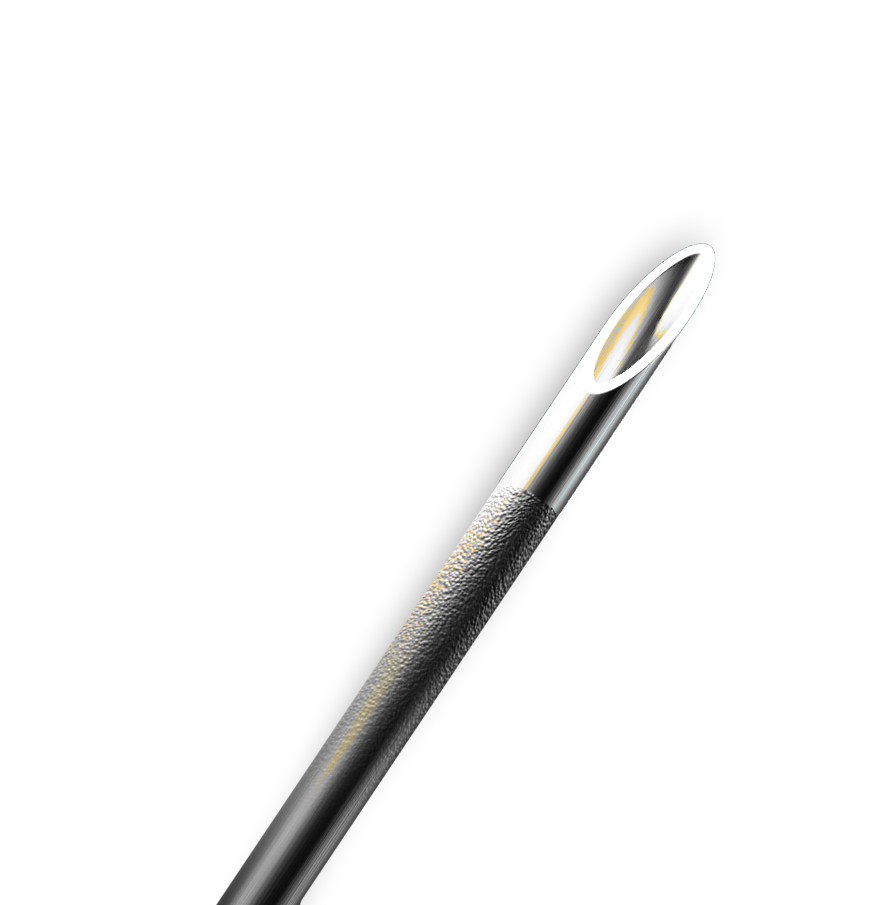
SonoCoat embeds acoustic microspheres into needle and catheter surfaces, making devices visible on ultrasound screens from any angle during procedures.
Two challenges that our platform technologies are built to address
Central venous access has improved considerably over the past two decades. Insertion bundles, chlorhexidine skin preparation, maximal barrier precautions and dedicated line teams have all moved the numbers, and ultrasound guidance has changed placement altogether. Two problems sit outside what any of that can reach, because both are properties of the device rather than of the procedure.
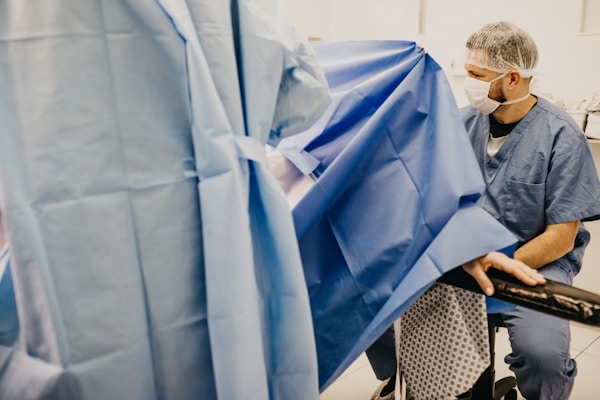
Colonisation and bloodstream infection
Here comes a subtitle
A central line is a surface sitting in the bloodstream, sometimes for weeks. Bacteria reach that surface, adhere to it, and form a biofilm that is far harder to clear than the same organisms in suspension. From there, fragments shed into the circulation. In the United States alone, an estimated 250,000 bloodstream infections occur each year, most of them related to the presence of intravascular devices, at an attributable cost of roughly $45,800 per case
We developed an hydrophilic bio-based coating with antifouling properties. Our first prototype showed a 2-log reduction in bacterial attachment without any antibiotic, and coated surfaces have sustained near-complete inhibition of biofilm formation for up to 29 days under continuous exposure compared with uncoated controls.
Ultrasound guidance improves first-pass success and reduces complications from 13.5% to 4.0%. Its main limitation is device-related: the needle tip can be hard to track in the short-axis view, risking complications like arterial puncture or pneumothorax.
A device that reflects ultrasound from any angle removes the dependency on holding a perfect plane. SonoCoat embeds acoustic microspheres in the surface that scatter ultrasound in all directions, so the shaft and tip stay visible as the angle changes. The technology is not yet on the market; performance data is available on request.

Placement you cannot fully see
The need for an echogenic coating technology for precision medical instruments.
Where our platform technology fits in perfect harmony
From a routine biopsy to a complex ablation, the target is everything. Sono-Coat ensures your device reaches it.

Toxic free medical coating
Lorem ipsum dolor sit amet, consectetur adipiscing elit. Suspendisse varius enim in eros elementum tristique.
Safe by design: Creates a biological shield that prevents pathogens and proteins from binding to the medical instrument.
ISO 10993 validated: Fully tested and passed all relevant biocompatibility tests
Non-Animal Components: The coating is derived exclusively without animal products.
Non-Thrombogenic & Hemocompatible: It significantly reduces hemolysis, platelet activation, and protein adsorption (such as fibrinogen and albumin),

Oncology and diagnostic biopsy
Clear tip visualization for EUS-FNA, prostate, liver, and breast procedures where a miss is not an option.
Vascular access
Guide CVCs, PICC lines, and arterial catheters with certainty and reduce the trauma of multiple sticks.
Regional anesthesia and pain management
Navigate complex nerve blocks with a needle you can always see, improving patient safety and block efficacy.
Interventional radiology
Maintain visibility during ablations, nephrostomies, and drainages even in deep or difficult anatomy.
Upgrade your product portfolio
Upgrade your portfolio and add best-in-class performance. Compatible with metals, alloys ceramics or polymers.
Add omnidirectional visibility
SonoCoat® gives an instrument acoustic visibility that holds across the angle range a procedure uses. Embedded microspheres reflect ultrasound in all directions, so the tip and the shaft stay visible in real time during complex interventions.
Add the complementary LipoCoat® top layer
By incorporating LipoCoat® as an optional hydrophilic additive, your device gains a smooth, low-friction surface profile that shields against bio-fouling and inhibits bacterial attachment.
Upgrade your medical device coating portfolio without engineering effort.
Buying a coating platform is often read as giving up control. In practice the question is narrower than it looks: which parts of your product are actually affected, and which are not. Here is the honest division.
Documented for your submission
Full ISO 10993-1 programme passed, with test reports available for your technical file
You are not locked into a single source
Once it has been transferred, what you buy from us is the formulation, not the capability.
IP Ownership
Your device IP remains yours. Our platform IP remains ours, licensed to you for the application we agree on.
Tailormade
You bring the device and the market access, we bring the surface technology tailored to your needs.
FAQ
The questions device manufacturers ask us most often when they are evaluating a coating partner for a catheter program.
Building capability in-house is a reasonable default, and for extrusion, braiding and tip forming it is usually the right one. Surface chemistry behaves differently. It needs different equipment, different analytical methods and different people, and the development chain runs from formulation through substrate adhesion, process window, sterilization compatibility, shelf life and biological evaluation before you reach verification on the finished device. Each link has to close before the next one starts. Our platform enters that chain with the ISO 10993-1 program already passed and a coated central venous catheter already approved by the Taiwan FDA, so a project begins at substrate compatibility rather than at formulation.
No. Three kinds of intellectual property sit in a coated catheter and they stay separate. Your device IP, meaning your geometry, materials, construction, indications and clinical evidence, remains entirely yours. Our platform IP remains ours and is licensed to you for the application we agree on. Anything the two of us create during a joint program is defined in the agreement before the work starts rather than argued about afterwards. We appear in your technical documentation as the supplier of a device component, in the same way your resin and packaging suppliers do.
This is why technology transfer is one of the three routes rather than an afterthought. The coating is applied by single-step dip coating at ambient temperature, with no curing step, no UV and no proprietary equipment, so the process can run inside your own line under your own quality system and operated by your own people. Once it has been transferred, what you source from us is the formulation rather than the capability. For programs where continuity has to be secured contractually, we are open to the arrangements a procurement team would normally ask for.
It is a passive phospholipid bilayer that delivers hydrophilic and anti-fouling behavior from the same 5 nanometer layer. It is not an antimicrobial coating in the conventional sense. Antimicrobial coatings act on organisms by releasing or presenting a biocide; LipoCoat contains no antibiotics and no biocides. Its hydration layer keeps proteins, platelets and bacteria from adhering in the first place, which is also why it is non-thrombogenic and reduces hemolysis, platelet activation and protein adsorption including fibrinogen and albumin. Nothing depletes and nothing leaches, so performance does not decline across the dwell time and there is no mechanism through which bacterial resistance can develop.
Compatible polymers include polyurethane, PVC, silicone, PEBAX, PEEK and nylon. Device types include central venous catheters, peripherally inserted central catheters, other central vascular access devices, Foley and urological catheters, and vascular access sheaths. Catheters are one of our two proven application areas: a coated antifouling central venous catheter developed with CEMMA Medical and Eline Medical received Taiwan FDA approval in May 2025, with European and North American filings in preparation. For device types outside that set we start with a feasibility study rather than a promise.
Yes, and that combination is why most conversations start. SonoCoat® provides acoustic visibility during placement, LipoCoat® provides anti-fouling and lubricity across the dwell time, and the two are applied as a base layer and a top layer within one development program and one quality system. They are two platform technologies developed in house rather than two settings of one coating. LipoCoat® is in a device approved by the Taiwan FDA. SonoCoat® is not yet on the market; performance data is available on request.
Still have questions?
Please contact us to discuss your project.