
Needle coating for ultrasound visibility and silicone-free glide
SonoCoat® keeps a needle visible under ultrasound. LipoCoat® replaces silicone oil on a cannula with a bound bio-based layer. Two platform technologies, one development partner.

Passive, bio-based anti-fouling barrier against protein and microbial adhesion
A bio-based substitute for silicone oil, with up to 95% less friction
Angle-independent ultrasound visibility, including at steep insertion angles
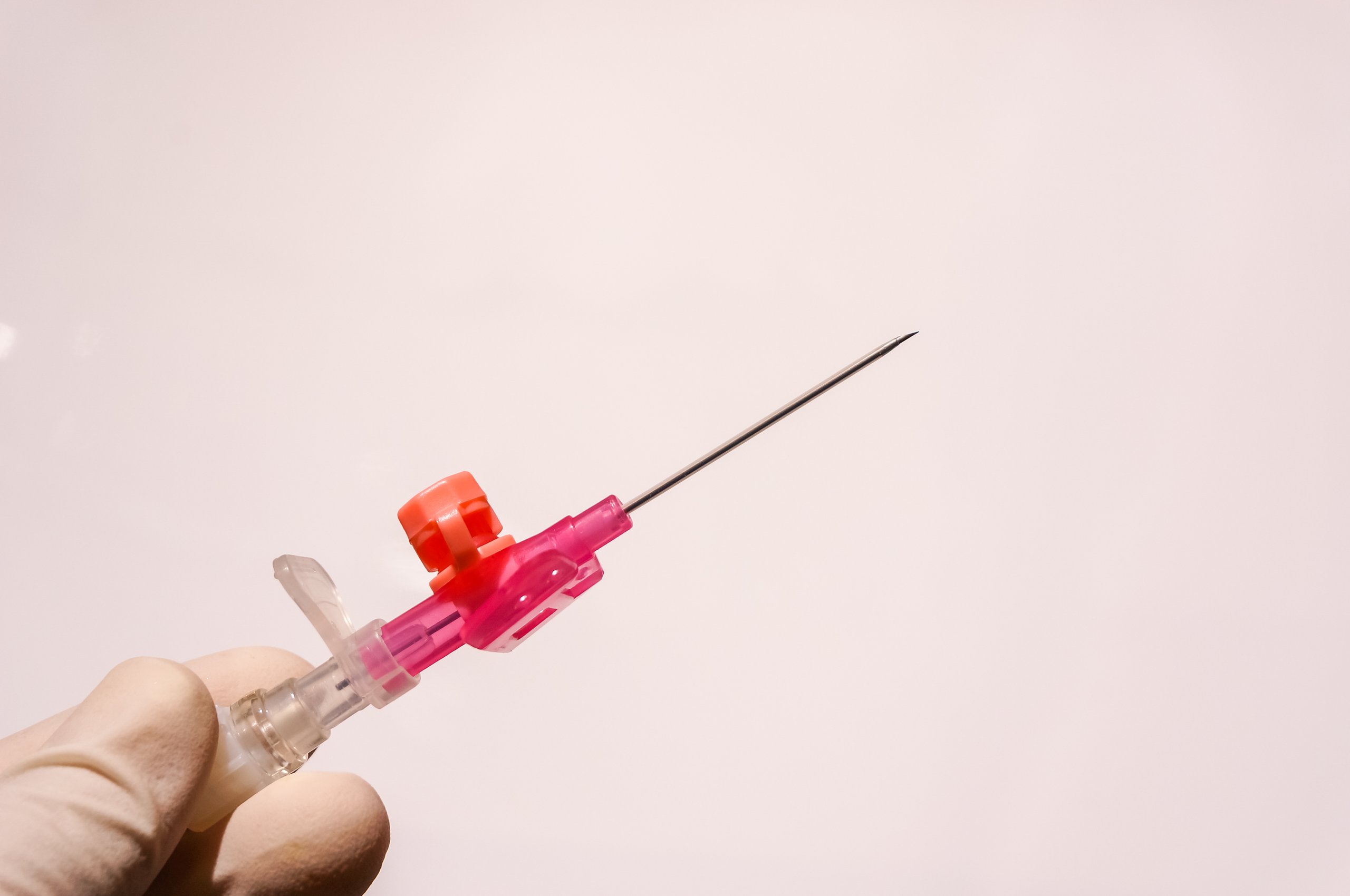
Medical Device coatings
LipoCoat delivers bio-inspired surface solutions that prevent fouling and improve device performance. SonoCoat provides ultrasound visibility for precise clinical guidance.

PFAS free protection for medical devices
LipoCoat mimics living cell membranes with a precisely engineered 5nm bilayer that prevents fouling and extends device life in the body.
.jpg)
One time right interventions made possible with ultrasound visibility coating
SonoCoat embeds acoustic microspheres into needle and catheter surfaces, making devices visible on ultrasound screens from any angle during procedures.
What each coating is for, and which of your products it applies to
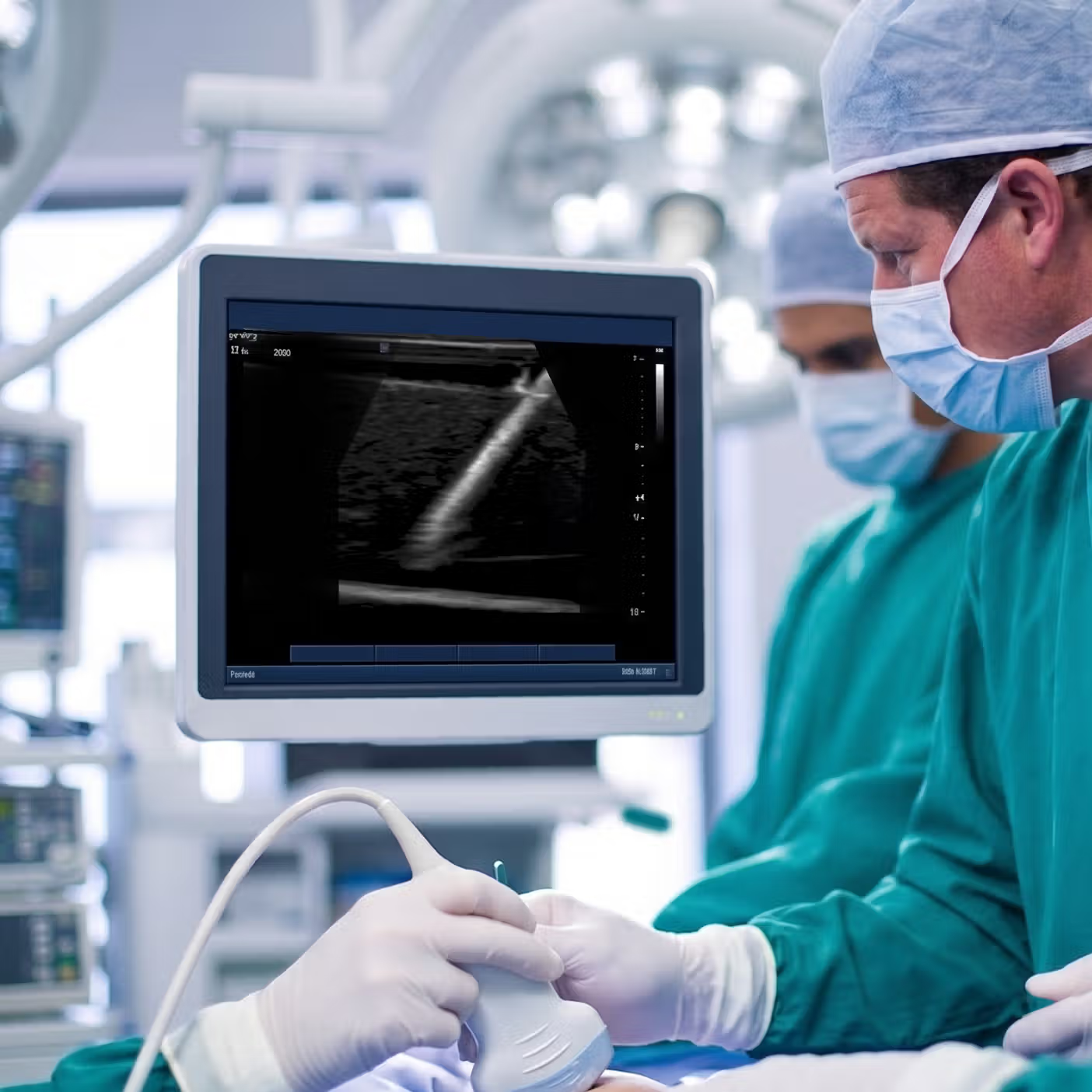
Steep angles are where the needle disappears
Ultrasound guidance depends on seeing the needle, and smooth steel stops cooperating as the angle steepens.
Ultrasound guidance is necessary for advanced interventions that require high accuracy. However, medical devices must be treated to make them visible under ultrasound.
SonoCoat® brings angle-independent visibility to medical instruments. Our medical coating produces a uniform acoustic reflection layer, delivering improved clarity for ultrasound-guided procedures. The coating is applied to the finished needle, so the geometry you already validated stays as it is.
Beyond this insertion angle, conventional needles lose acoustic reflection toward the probe.
Almost every cannula on the market is siliconized, and for good reason. Silicone oil is inexpensive and it gives a needle the glide that makes insertion tolerable for the patient. The use of silicone-lubricated needles can however lead to the release of microdroplets, causing unwanted protein aggregation in medications and significantly increasing the risk of tissue inflammation, ocular complications, and severe autoimmune reactions.
LipoCoat® is a bio-based alternative coating technology. The hydrophilic coating forms a nanoscale surface with an exceptionally low contact angle. This drastically cuts the insertion force needed for medical devices. On stainless steel needles, our coating outperforms conventional silicone oil under wet conditions. Documentation on file. Because it is a substitution rather than an addition, it applies across a needle and cannula portfolio instead of to a subset of it.
Of our coatings contain PFAS, silicones or PTFE.
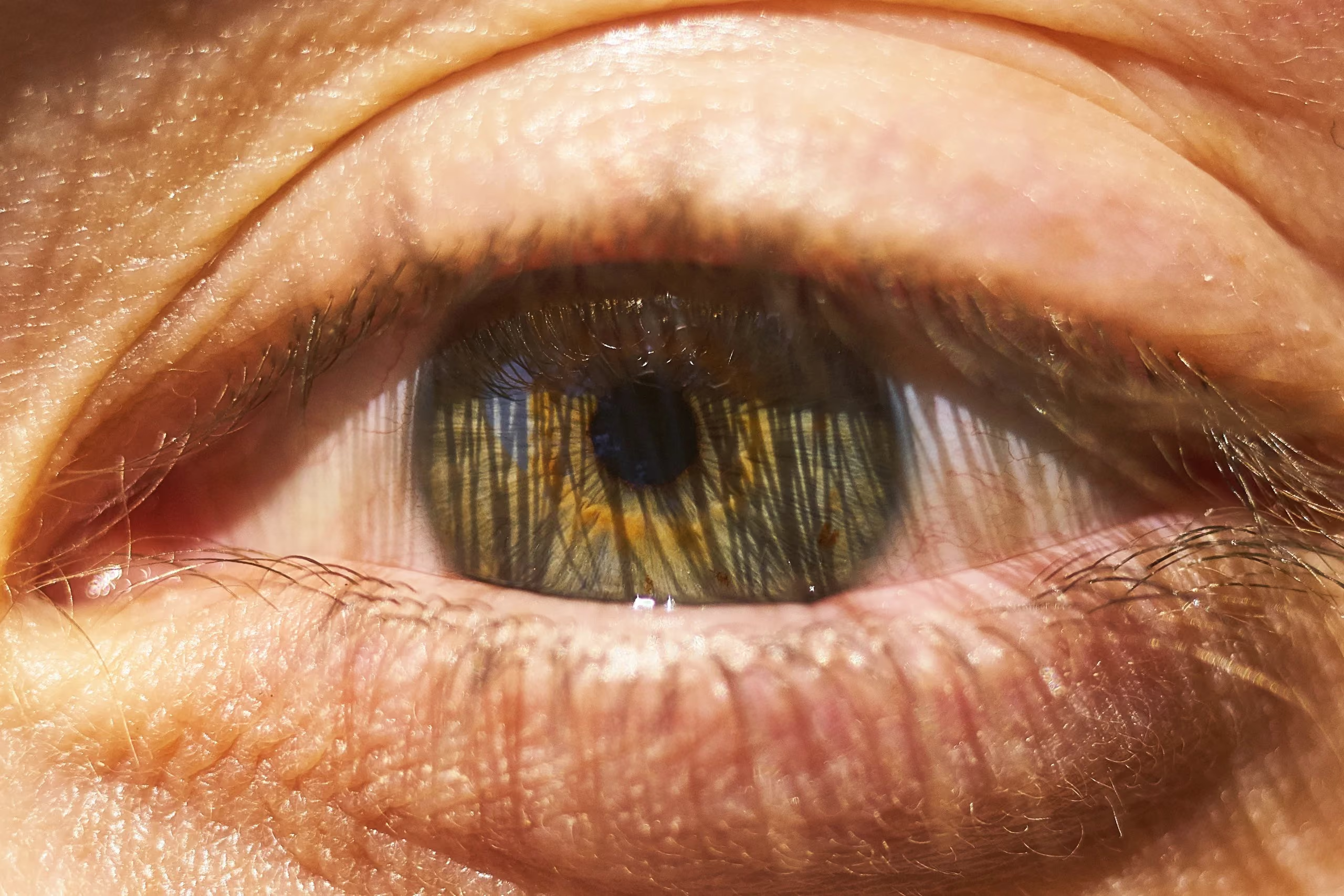
Silicone works, but what is the non-synthetic alternative?
Silicone oil is the default lubricant on cannulas, but in some applications there is an need for a bio-based alternative.
Where SonoCoat® earns its place
From a routine biopsy to a complex ablation, the target is everything. These are the procedures where seeing the needle changes what happens next.

Bio-inspired coatings for needles and cannulas
Two platform technologies developed in house: SonoCoat® for ultrasound visibility where the procedure needs it, and LipoCoat® as a bio-based replacement for silicone across the rest of the portfolio.
Safe by design: a passive barrier that keeps proteins and micro-organisms from adhering to the needle surface.
Tested to ISO 10993: the relevant biocompatibility tests are passed and the reports are available for your technical file.
No animal-derived components, and no PFAS, PTFE or silicone in the coating.
Non-thrombogenic and hemocompatible: reduced hemolysis, platelet activation and protein adsorption including fibrinogen and albumin.
Oncology and diagnostic biopsy
Clear tip visualization for EUS-FNA, prostate, liver, and breast procedures where a miss is not an option.

Vascular access
Guide CVCs, PICC lines, and arterial catheters with certainty and reduce the trauma of multiple sticks.

Regional anesthesia and pain management
Navigate complex nerve blocks with a needle you can always see, improving patient safety and block efficacy.
Silicone-free cannula
Maintain smooth needle movement by replacing silicone oil with our patented bio-based LipoCoat® technology.
Upgrade your product portfolio
Upgrade your portfolio and add best-in-class performance. Compatible with metals, alloys ceramics or polymers.
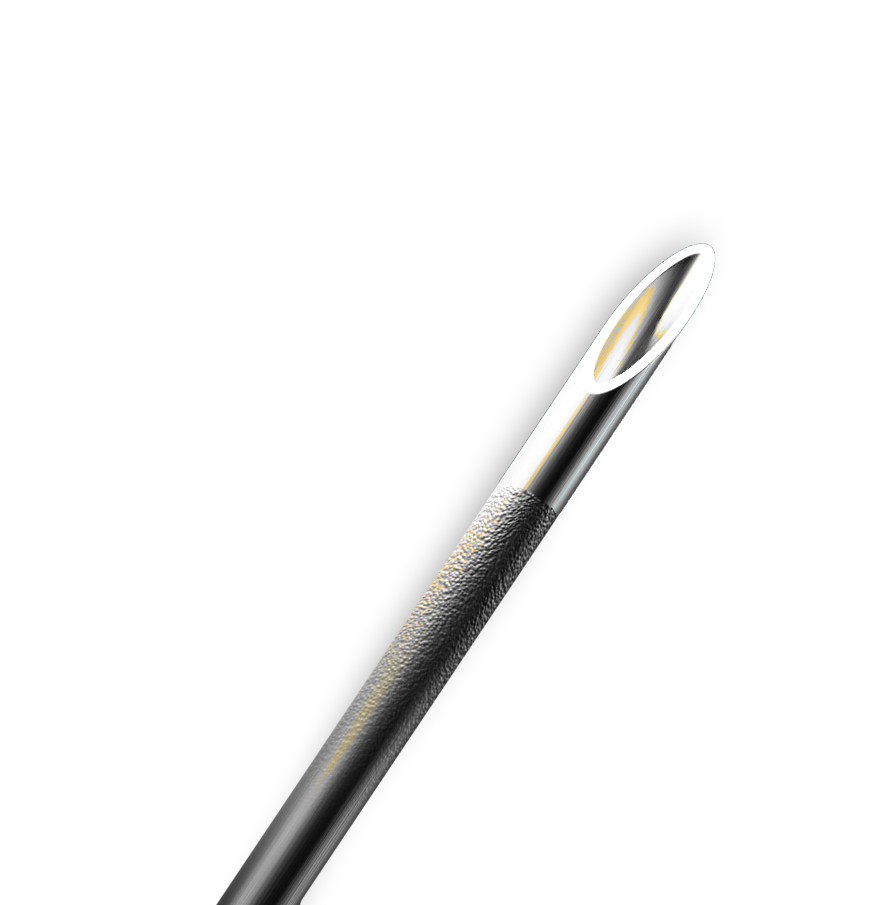
Add omnidirectional visibility
SonoCoat® gives an instrument acoustic visibility that holds across the angle range a procedure uses. Embedded microspheres reflect ultrasound in all directions, so the tip and the shaft stay visible in real time during complex interventions.
Add the complementary LipoCoat® top layer
By incorporating LipoCoat® as an optional hydrophilic additive, your device gains a smooth, low-friction surface profile that shields against bio-fouling and inhibits bacterial attachment.
Become a partner
Work with our next-gen medical coating solutions
Curious about our platform technologies? Tell us about your needle and an engineer will come back with a route, a timeline and the measurements we would run first.
FAQ
The questions needle and cannula manufacturers ask most often when they evaluate the LipoCoat® and SonoCoat® platforms.
Not every needle needs it. SonoCoat® earns its place where the procedure is ultrasound-guided and the needle is hard to see, which in practice means steep insertion angles, deep targets, or both. That covers oncology and diagnostic biopsy such as EUS-FNA and prostate, liver and breast procedures; vascular access for central venous catheters, PICC lines and arterial catheters; and regional anesthesia, where a nerve block depends on knowing exactly where the tip is. On a hypodermic needle used without imaging there is nothing for it to do. If your portfolio includes ultrasound-guided needles, that subset is where we would start.
Mechanically textured needles, whether laser-dimpled, etched or corner-cube patterned, are the established approach and they work. A structured surface scatters ultrasound back toward the probe instead of reflecting it away, and for many procedures that is enough. The trade-offs are geometric: the texture is cut into the needle wall, so it belongs to the needle it was designed into, and it changes the surface tissue moves against. SonoCoat® adds the acoustic function as a coating instead. Microspheres embedded in the layer scatter ultrasound in all directions rather than in the directions a pattern was cut for, which is what holds visibility at the steep angles where a smooth surface returns almost nothing to the probe.
That is what LipoCoat® is for on needles. Silicone oil gives a cannula its glide, and it is effective, inexpensive and thoroughly understood, which is why it has been the default for decades. It is also a mobile phase: some of it leaves the needle in use, it can interact with certain drug formulations, and silicone-free is appearing more often in tender specifications and in customer requirements. LipoCoat® is a bound bio-based layer rather than an applied oil, so it lubricates without anything that can migrate off the surface, and it reduces friction by up to 95 percent. It contains no silicone, no PTFE and no PFAS. Unlike SonoCoat®, this applies across the whole needle and cannula portfolio rather than to a subset.
They behave differently, so it is worth separating them. LipoCoat® is applied at 5 nanometers, far below the tolerance of any needle dimension, so outer diameter, wall thickness, bevel geometry and stiffness stay as you specified them. SonoCoat® is a functional layer of 35 to 90 micrometers, because acoustic scattering depends on the microspheres it carries and on the layer that holds them. Where a device sits in that range is set by the acoustic performance the application needs, and it is confirmed against your dimensional tolerances during the feasibility study rather than assumed. Insertion force moves the other way: the LipoCoat® top layer reduces friction by up to 95 percent, which means less tissue displacement on entry.
Yes, and on ultrasound-guided needles that combination is usually why the conversation starts. SonoCoat® goes on as the base layer and carries the acoustic function. LipoCoat® goes over it as a 5 nanometer top layer and carries the lubricity and anti-fouling function, in one development program under one quality system. LipoCoat® is a single-step dip coating at ambient temperature with no curing, no polymerization, no UV and no proprietary equipment, so it can run inside your own line. SonoCoat® carries microspheres and has its own process window, which the feasibility study establishes for your needle and your volumes. Three routes are open: we coat your components in our ISO 13485 facility, we transfer the process into your line, or we develop jointly through to the regulatory package.
LipoCoat® has passed the relevant ISO 10993 biocompatibility tests, covering cytotoxicity, sensitization, intracutaneous reactivity, acute and systemic toxicity, pyrogenicity and hemocompatibility, and the reports are available for your technical file. It is in a coated central venous catheter that received Taiwan FDA approval in May 2025. SonoCoat® is not yet on the market; its performance data is available on request. Both coatings enter your device as a component evaluated under your own conformity assessment, and because neither contains a medicinal or biocidal substance, neither moves your device into the ancillary substance route.
Still have questions?
Please contact us to discuss your project.