
Why ultrasound visibility is still a challenge
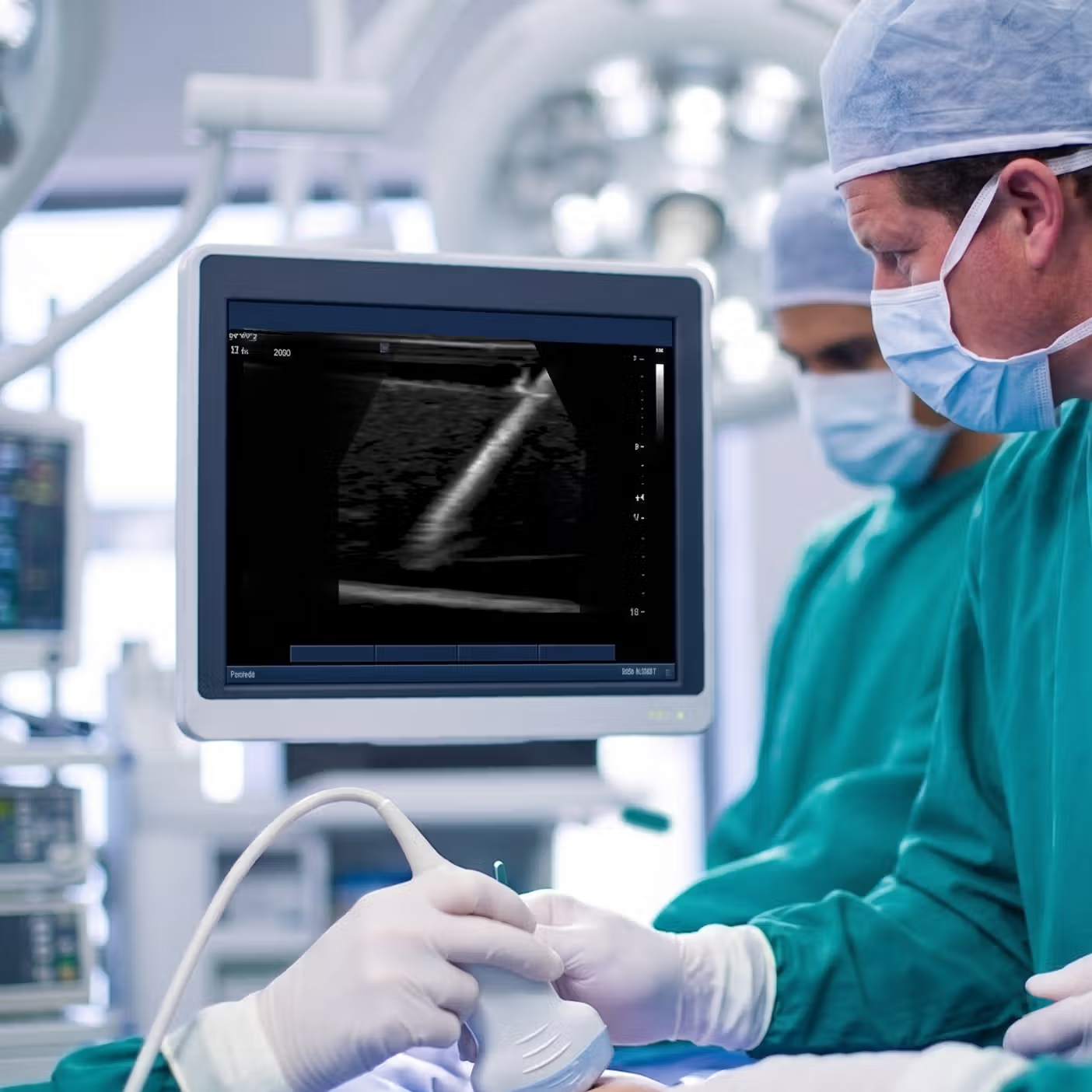
Hospitals and surgical centers are increasingly adopting ultrasound guidance across multiple procedures. Yet maintaining device visibility remains a persistent operational challenge.

Visibility still depends on the angle and on operator technique
While soft tissue and organs show clearly under ultrasound, metal and polymer instruments often fade or disappear as the insertion angle increases. That visibility gap adds complexity during precision-critical procedures, and clinicians compensate with manual maneuvers to relocate the needle tip.
The trade-off in a machined echogenic surface
Machined echogenic surfaces work by scattering the ultrasound to the transducer. The texture is cut into the wall of that specific device, so it is a design decision rather than a surface option, and how much signal returns still depends on how the pattern meets the beam.
The cost of a second attempt
Because misplacing a catheter can be dangerous for the patient, verifying placement accurately matters. Poor visibility can force additional insertion attempts, and each pass adds tissue trauma, procedure time and risk.

Improved precision from every angle
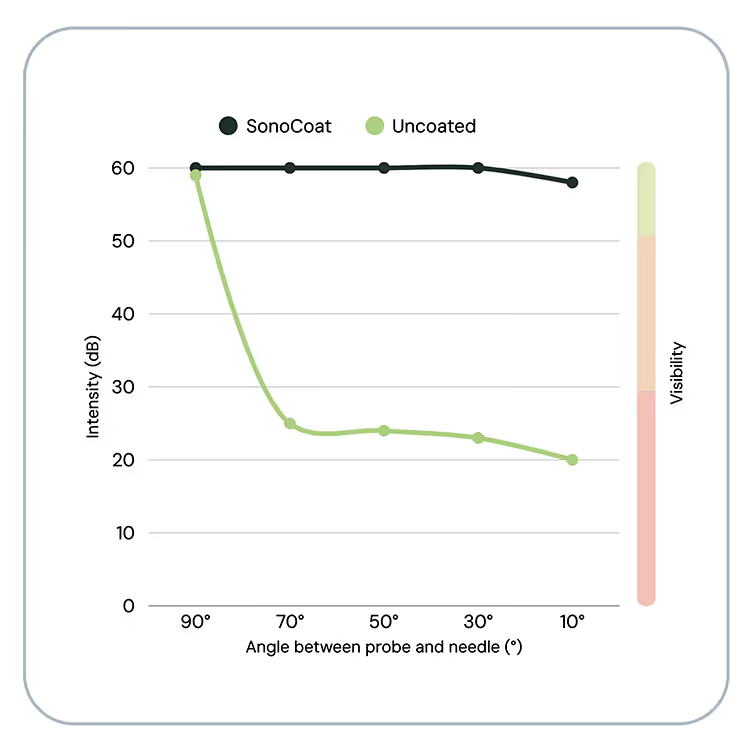
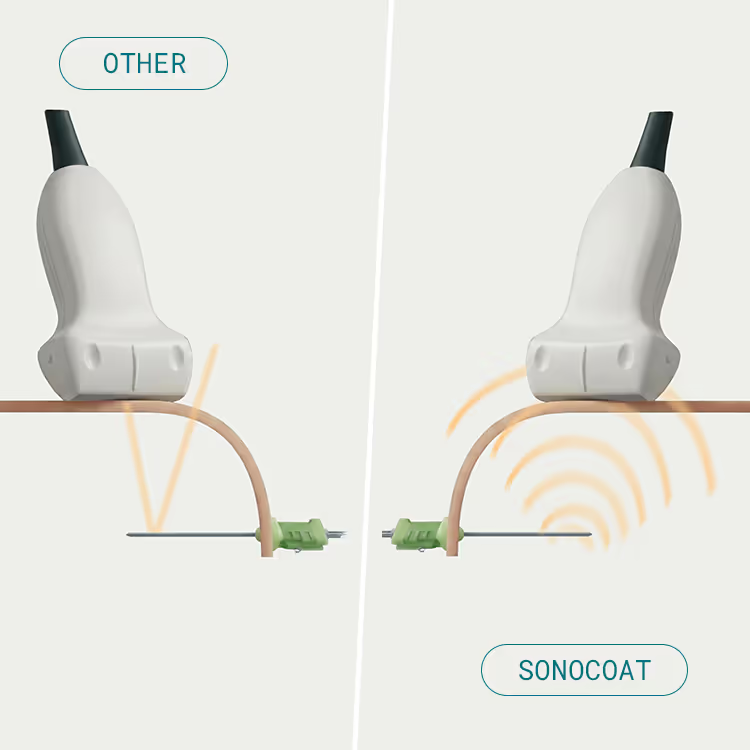
A smooth needle or catheter is a specular reflector: it returns the ultrasound beam to the probe only near perpendicular incidence, and beyond roughly 45 degrees very little comes back. SonoCoat® technology scatters the beam in all directions instead, so visibility does not fall away as the angle steepens or depth is increased.
Patented coating
Rather than roughening or cutting the base material, we deposit an acoustically reflective coating to the finished device.
Localized and angle-independent visibility
Device visibility ensured across all wide range of angles. Specific parts and multiple parts can be coated and visualized.
Your medical device stays your device
Your geometry, materials, construction, indications, clinical evidence, and brand are what make the product yours. None of these change when integrated with our platform technology.
Where precise ultrasound guidance is required
Real-time ultrasound guidance is specifically recommended to prevent complications during high-risk procedures, such as Central Venous Catheter (CVC) placement, PICC lines, and complex infusion protocols.
.jpg)
Fewer maneuvers to find your reference point
Conventional nerve-block needles lose acoustic reflection at insertion angles beyond roughly 45 degrees. Clinicians then compensate with manual maneuvers to relocate the tip, which adds time and handling during a delicate procedure.
SonoCoat® technology provides full-angle visibility across needle designs. Whether guiding deep nerve blocks or working with high-BMI patients, clinicians keep target visibility without relying on compensatory techniques.

Oncology and diagnostic biopsy
Clear tip visualization for EUS-FNA, prostate, liver, and breast procedures where a miss is not an option.
Vascular access
Turns polymer catheters into high-visibility devices, giving clinicians visual feedback across the angle range rather than only near perpendicular.

Regional anesthesia and pain management
Navigate complex nerve blocks with a needle you can always see, improving patient safety and block efficacy.

Interventional radiology
Maintain visibility during ablations, nephrostomies, and drainages even in deep or difficult anatomy.
Upgrade your product line
Upgrade your portfolio and add best-in-class performance. Compatible with metals, alloys ceramics or polymers.
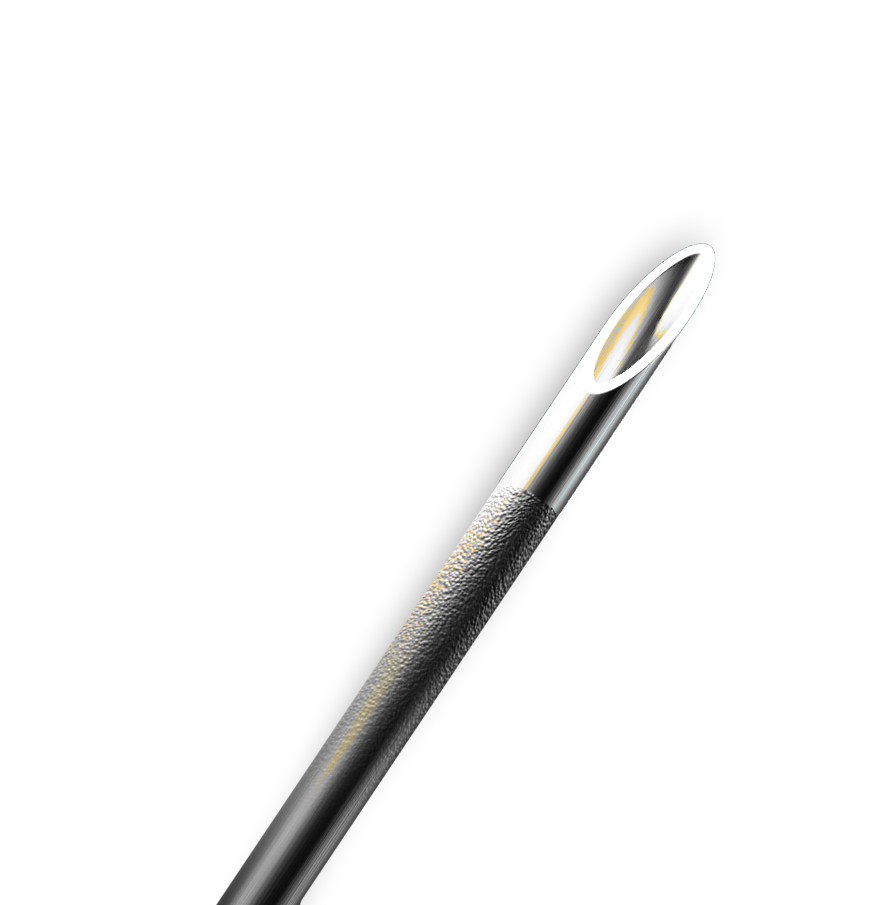
Add omnidirectional visibility
SonoCoat® gives an instrument acoustic visibility that holds across the angle range a procedure uses. Embedded microspheres reflect ultrasound in all directions, so the tip and the shaft stay visible in real time during complex interventions.
Add the complementary LipoCoat® top layer
By incorporating LipoCoat® as an optional hydrophilic additive, your device gains a smooth, low-friction surface profile that shields against bio-fouling and inhibits bacterial attachment.

Ranked best by 60-ultrasound specialists
In the EUS Needle Identification Comparison and Evaluation study, published in Gastrointestinal Endoscopy, 60 ultrasound specialists rated standardized ultrasound videos of ten 22-gauge EUS-FNA needles without knowing which device they were watching: 43 endosonographers and 17 gastrointestinal radiologists. 80% were needles already on the market, 2 were prototypes, and the one carrying the SonoCoat® technology ranked highest overall. Ratings from the two specialist groups did not differ significantly from each other.
Tang SJ, Vilmann AS, Saftoiu A, et al. EUS needle identification comparison and evaluation (NICE) study (with videos). Gastrointestinal Endoscopy 2016;84(3):424-433.e2. doi:10.1016/j.gie.2016.01.068
Join our mission
Become a partner
Are you interested in our products? We believe in long-term relationships that bring value and impact, reach out to gain a unique competetive advantage.
FAQ
The questions device manufacturers ask most often about the SonoCoat® platform technology.
The mechnical integrity is not affacted. The SonoCoat® technology is applied to the finished device rather than machined into it, so the device is left intact. The acoustically reflective coating thickness varies between 35 and 90 micrometers, set by the acoustic performance the application needs and confirmed against your dimensional tolerances during the feasibility study. Machined echogenic surfaces take a different route, cutting notches or grooves into the wall, which makes echogenicity a design decision for that specific device rather than a surface option.
The SonoCoat® technology can be applied on metal such as stainless steel, nitinol, titanium, but also on ceramic and polymer components such as polyurethane (PU), nylon, PEBAX, PEEK, PVC and polysilicones. The coating thickness and acoustic response are tailored to the insertion depth the procedure needs, from shallow and medium access through to deep tissue.
SonoCoat® is engineered for scalable integration without redesigning your line. The coating process needs no specialized handling protocols and no unique disposal procedures on the factory floor, so an existing needle or catheter line can be upgraded without a facility redesign or capital-intensive equipment. The process window for your specific device and volumes is established during the feasibility study.
SonoCoat® enters your device as a component evaluated under your own conformity assessment. It has passed ISO 10993 biocompatibility testing at certified laboratories, covering cytotoxicity, intracutaneous reactivity, sensitization, acute and systemic toxicity, pyrogenicity and hemocompatibility, and those reports are available for your technical file. Because the coating contains no medicinal or biocidal substance, it does not move your device into the ancillary substance route. Whether the change itself requires a notification or a new submission depends on your device and the scope of the change, and that is a call for your regulatory team.
Yes, it can be overcoated with lubricious (hydrophilic), antimicrobial or antithrombogenic topcoats, without loss of echogenic signal intensity. The combination with LipoCoat® we can offer in-house.
Standard devices suffer from anisotropy: the ultrasound beam reflects away from the transducer at steep insertion angles, and the tip fades from the display. SonoCoat® technology is acoustically reflective coating that scatter the beam omnidirectionally, which keeps the device legible over its full length across the angle range a procedure uses rather than only near perpendicular incidence.
Still have questions?
Please contact us to discuss your project.