
Contact lens coating for wettability and comfort
A 5 nanometer coating that mimics the natural tear film, reducing dryness, lipid fouling and microbial adhesion on the lens surface.

Passive, bio-based anti-fouling barrier against protein and microbial adhesion
Improved lubricity on any base material, with no PTFE, silicone or PFAS in the coating
Enhanced wettability, measured at 19% better NIBUT
.jpg)
What LipoCoat® changes in a contact lens portfolio
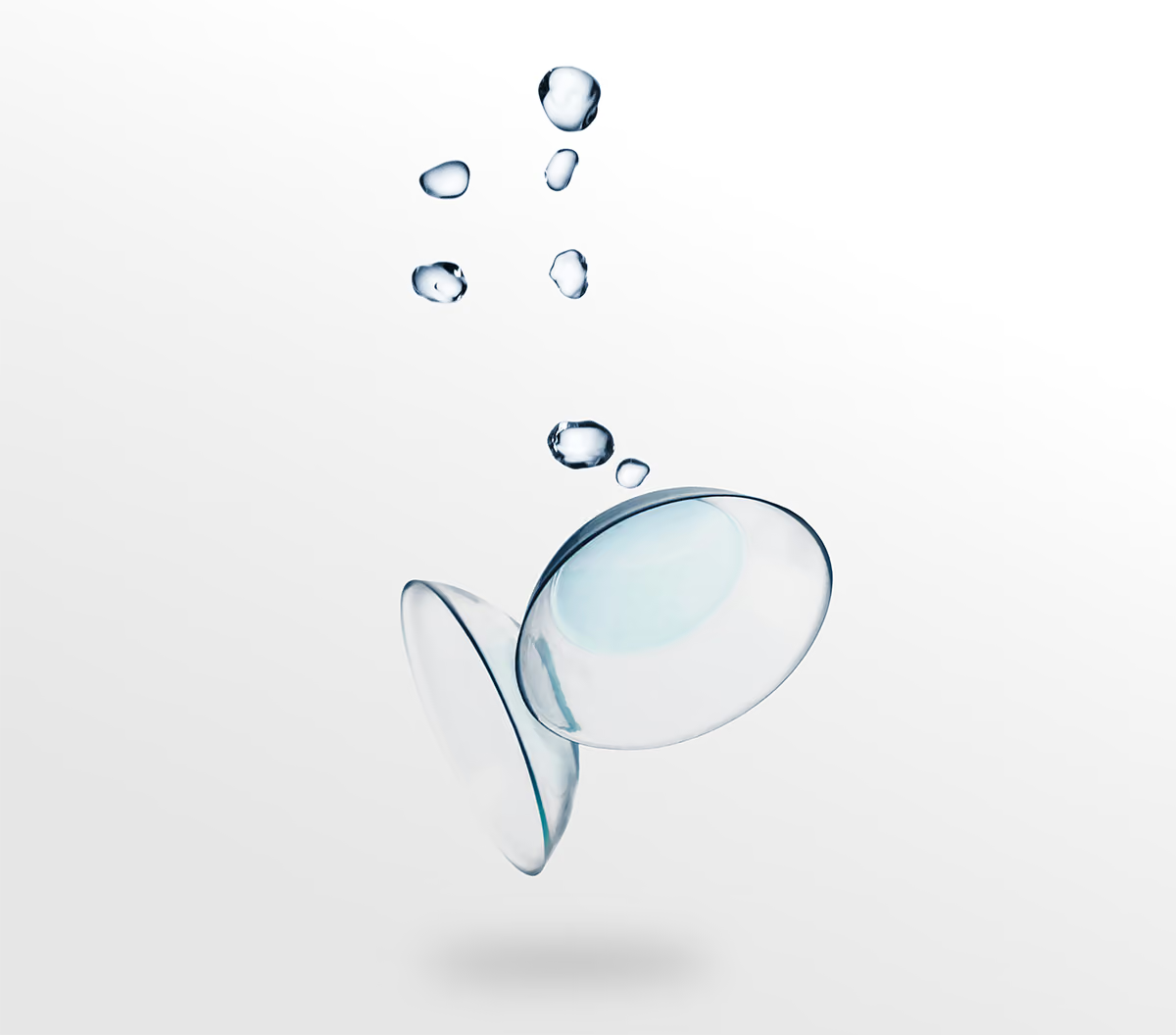
Wettability that holds across the wearing day
LipoCoat’s contact lens coatings are aimed at improving comfort and safety properties of the contact lens materials.
A lens is only as comfortable as the tear film that sits on it. On most lens materials that film thins and breaks up well before the end of the wearing day, and wearers experience that as dryness, friction and irritation. It carries a commercial cost as well: between 15 and 34 percent of wearers stop wearing lenses each year, with those symptoms among the leading reasons
(Dumbleton et al., Eye & Contact Lens 2013;39(1):93-99).
LipoCoat® mimics the natural cell membrane and actively attracts water molecules, which raises surface wettability and lubricity on the material you already use. In a clinical study, participants ranked LipoCoat® coated lenses as the overall best performing and the most comfortable lenses in the test.
In a clinical study, LipoCoat® improved non-invasive tear film break-up time (NIBUT) by 19 percent compared with the uncoated lens.
The surface treatments in use today work, and they work for good reasons. Plasma activation raises wettability across a whole batch at low cost and adds no material to the lens. Drops and surfactants give the wearer something to reach for the moment a lens dries out. Both are limited by the same thing: how long the effect lasts. A plasma-activated surface performs well at first and the effect decays. Drops and surfactants leave through the tear duct within minutes to hours, after which dryness and irritation return.
LipoCoat® is bound to the lens rather than carried in a solution. Once applied it stays on the lens for at least 6 months and keeps the surface hydrated across that period, so wettability becomes a property of the product you ship instead of something the wearer has to keep restoring. It also gives sprays and drops a smoother base to work on.
The period LipoCoat® stays on the lens after a single application.
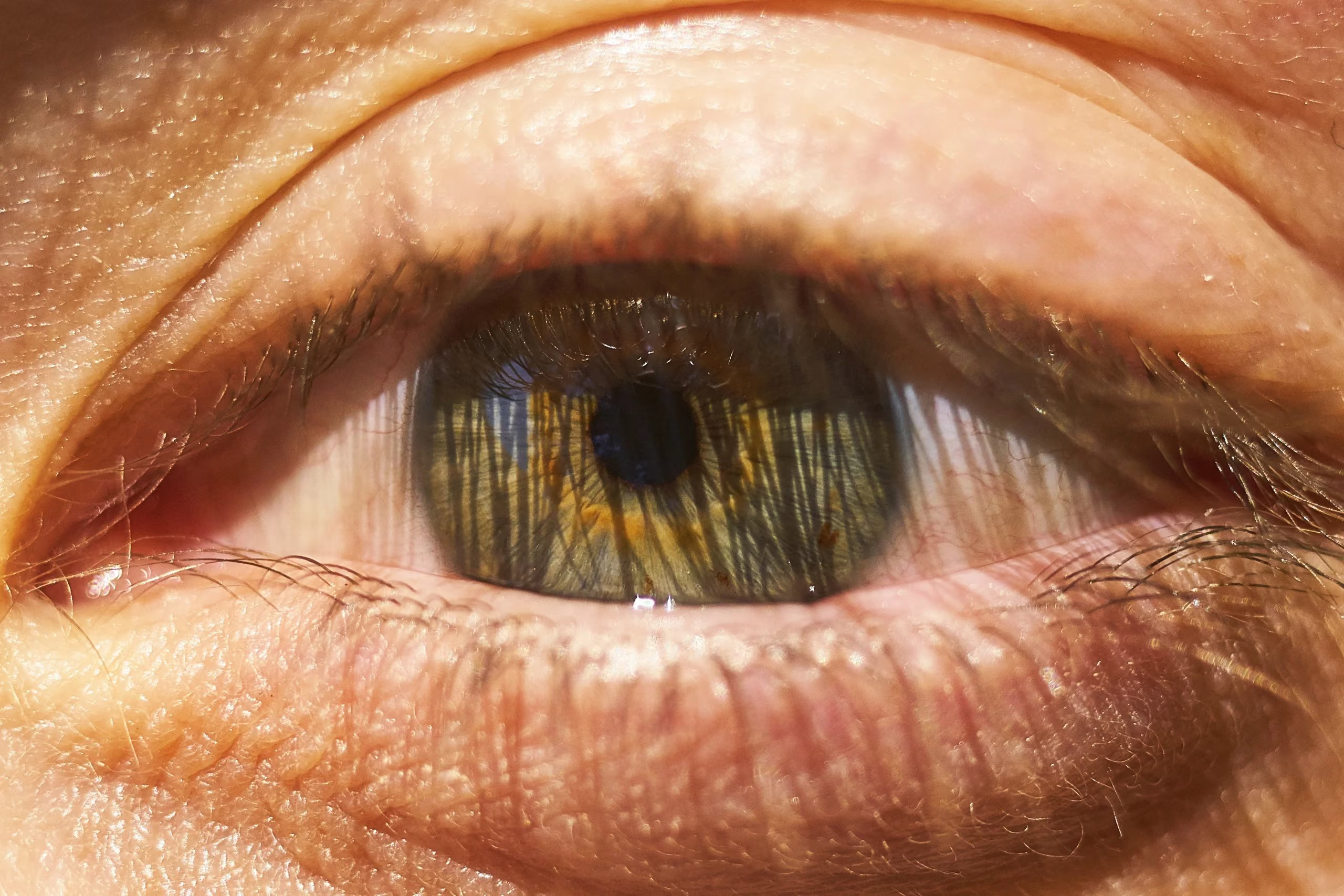
Comfort that lasts past the first hours
LipoCoat offers an additional solution to enhance comfort for a longer time.
A natural shield without toxic biocides
A coating against stubborn protein deposits and microbial infections with a nanolayer that harnesses the eye's natural defense.
Protein builds up on a lens surface over the wearing cycle. Wearers notice it first as blurry vision, and in severe cases it contributes to inflammation or infection. The usual answers are a biocide in the care solution or a shorter replacement cycle, and both move the cost or the risk somewhere else rather than removing it.
LipoCoat® is a 5 nanometer layer that mimics the human cell membrane, which makes it harder for proteins to adhere to the lens in the first place. It contains no antibiotics and no biocides, so there is nothing to leach and no mechanism through which bacterial resistance can develop.
Instead of repelling tear fluid indiscriminately, the surface binds and stabilizes lysozyme, the enzyme the eye uses for its own antibacterial defense.
Measured on the surface: LipoCoat® accumulated more than 90 percent more lysozyme than an uncoated lens. Lysozyme is the eye's own antibacterial enzyme.
One platform behind the lens, the spray and the drops
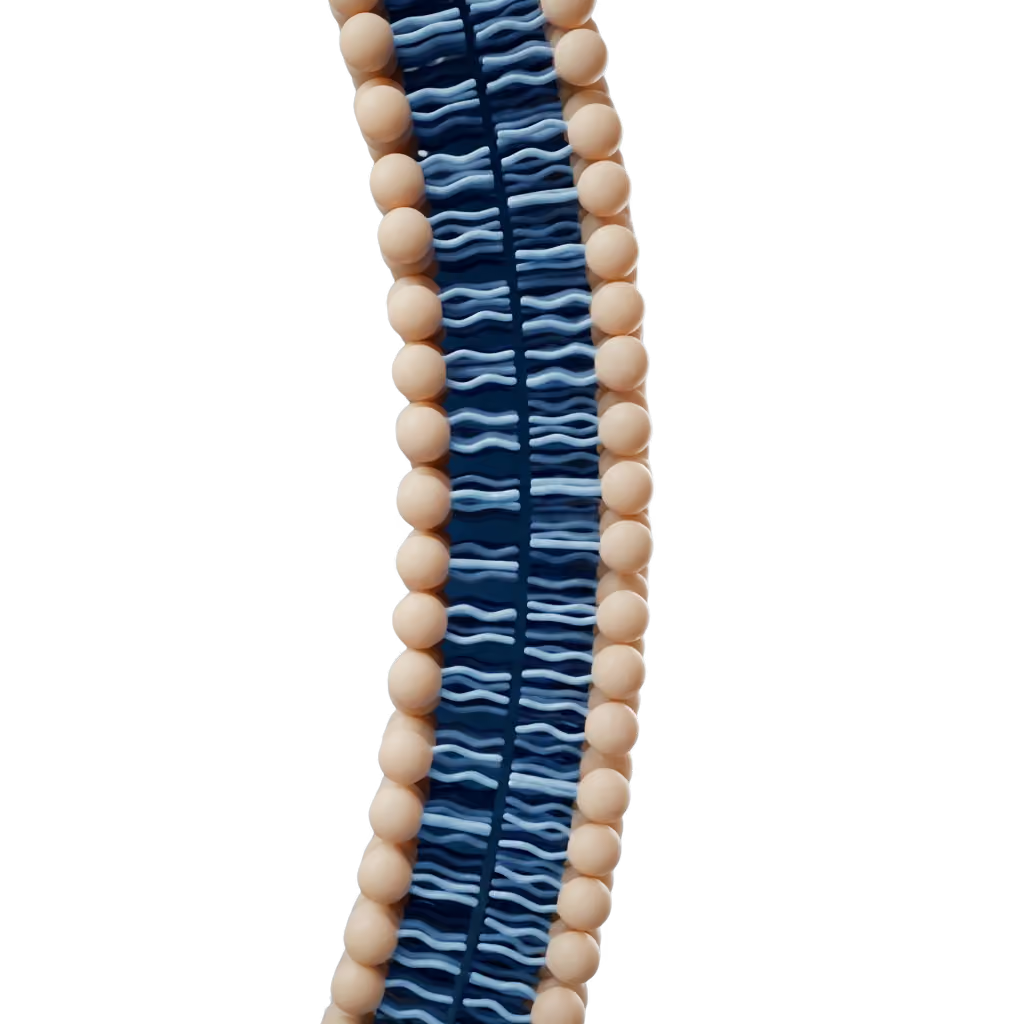
LipoCoat® mimics the phospholipid bilayer of the human cell membrane. That is what lets a coated surface behave like a familiar one rather than a foreign material, and it is why the coating works passively: nothing is released, nothing depletes, and there is no active agent for the body or for bacteria to react to. It contains no PFAS, no PTFE, no silicone, no antibiotics and no biocides, and it is applied in a single dip at room temperature with no curing, no polymerization and no UV.
The same chemistry runs across the portfolio. It coats RGP lens materials, and it forms the basis of bio-based contact lens sprays and bio-based eye drops, so one surface principle can cover the lens and the care products around it.
The product sheet puts our mechanical and biological properties next to the industry standards you work with today.
Built for RGP lenses, and for the products around them
In a clinical study, LipoCoat® coated lenses ranked highest on almost every parameter measured, with significant results for handling during insertion and removal and for average end-of-day comfort.

Bio-inspired coating for contact lenses
Discover our award-winning coating technology, designed for your product portfolio: coatings for RGP contact lenses, bio-based contact sprays, and bio-based eye drops.
Safe by design: a passive hydration layer that keeps proteins and micro-organisms from adhering to the lens surface.
Tested to ISO 10993: the relevant biocompatibility tests are passed and the reports are available for your technical file.
No animal-derived components, and no PFAS, PTFE or silicone in the coating.
Stays on the lens: a single application keeps the surface hydrated for at least 6 months.
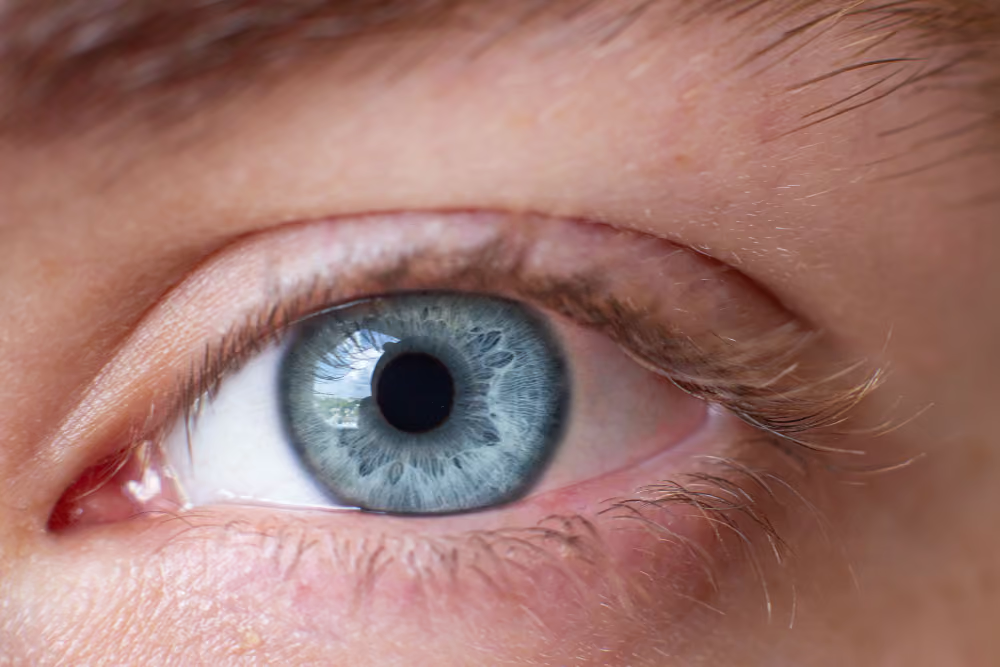
Improved comfort
LipoCoat® improved wettability and lubricity on several commonly used RGP lens materials, the two parameters that most directly determine how a lens feels to wear.

Supports the natural defense system
Lysozyme is the eye's own antibacterial enzyme. A LipoCoat® surface accumulates more than 90 percent more of it than an uncoated lens, so the eye's own defense keeps working on a coated surface.
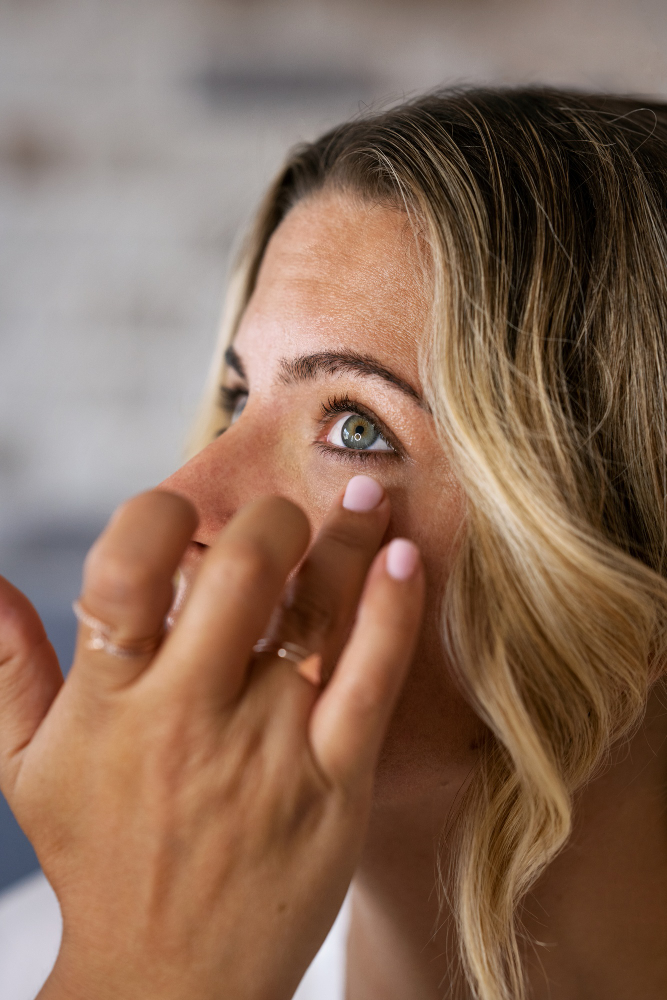
Safe by design
The coating is made from bio-based, non-animal materials. It is PFAS-free, scalable, and tested to ISO 10993 for biocompatibility.
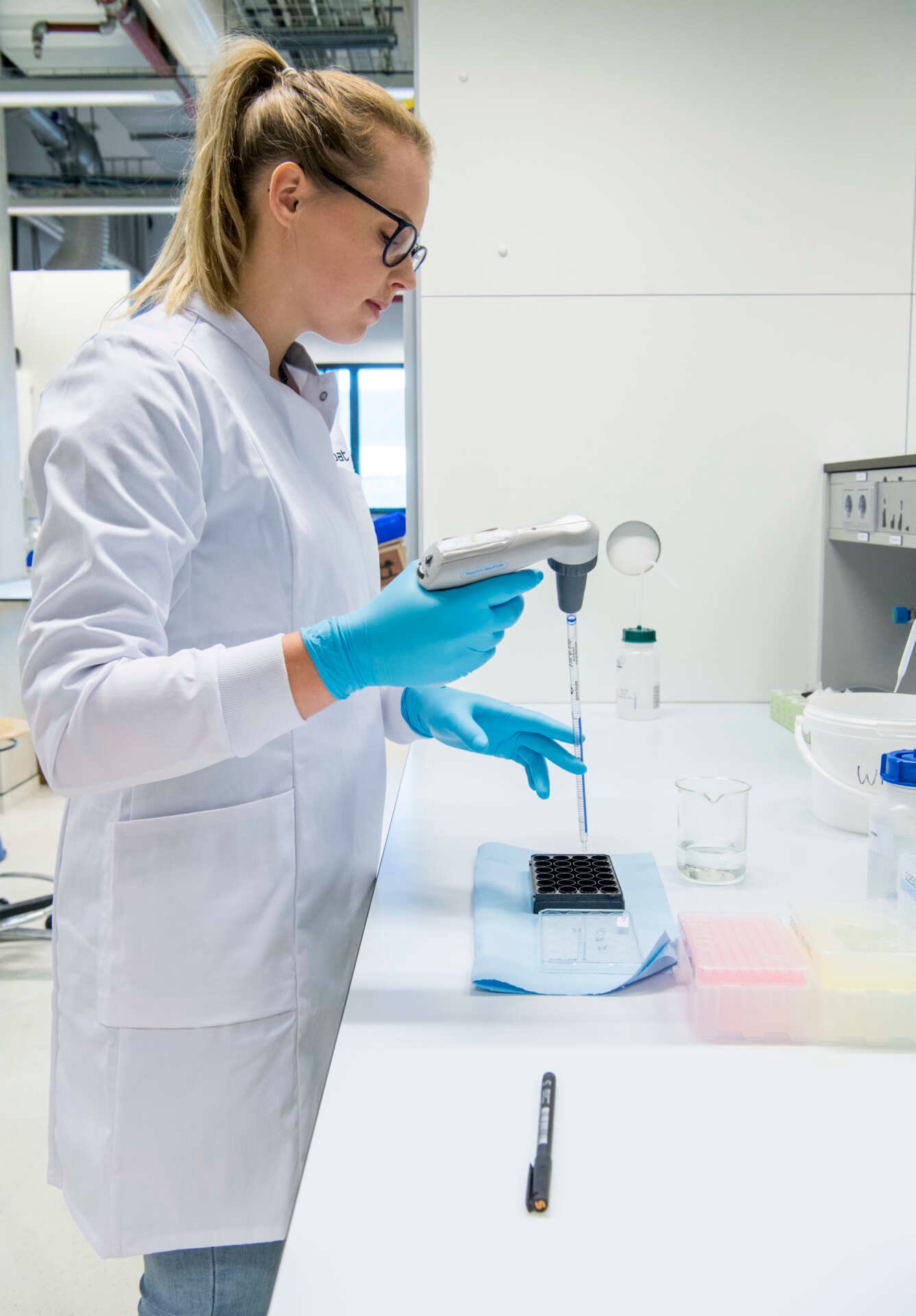
One-step coating integration
The simple one-step dip coating process requires no curing steps, such as polymerization or UV treatment.
Easy to integrate
In your production process
LipoCoat® can be integrated on top of your existing product portfolio without the lengthy pharmaceutical classification processes. Furthermore, the coating requires no specialized handling, utilization, or disposal protocols, facilitating seamless integration into existing manufacturing workflows.
Documented for your submission
Full ISO 10993-1 programme passed, with test reports available for your technical file
Low barrier to entry
No curing or complex equipment required
FAST dip-coating process
Compatible with standard dip coating at room temperature.
Low material usage
Minimal material consumption during application.
FAQ
The questions contact lens manufacturers ask most often when they evaluate LipoCoat® for an existing or a new lens portfolio.
Plasma activation and internal wetting agents both raise surface wettability, and both are established for good reasons. Their limitation is duration. A plasma-treated surface performs well at first and the effect is temporary, and drops and surfactants leave through the tear duct within minutes to hours, after which dryness and irritation return. LipoCoat® is a phospholipid bilayer of 5 nanometers that binds to the lens surface and stays there for at least 6 months, so wettability and lubricity become properties of the lens rather than of something the wearer keeps reapplying. It improves lubricity on any base material and contains no PTFE, no silicone and no PFAS.
In a clinical study, participants ranked LipoCoat® coated contact lenses as the overall best performing and the most comfortable lenses in the test, with significant results for handling during insertion and removal and for average end-of-day comfort. Tear film stability improved by 19 percent on non-invasive break-up time (NIBUT) compared with the uncoated lens. End-of-day comfort is where the commercial case sits: between 15 and 34 percent of wearers stop wearing lenses each year because of dry eyes, friction and irritation late in the day (Dumbleton et al., Eye & Contact Lens 2013;39(1):93-99). The underlying study data is available on request.
Once applied, LipoCoat® stays on the lens for at least 6 months and keeps the surface hydrated across that period. Because it is bound at the molecular level rather than applied as a film on top of the lens, there is no reservoir that depletes and nothing that leaches away, so performance does not fall off partway through the wear cycle. Durability figures for a specific lens material and care regime are part of a feasibility study rather than a general claim.
Rigid gas permeable (RGP) materials are our proven area, and the coating has shown improved wettability and improved lubricity on several commonly used RGP lens materials. At platform level the chemistry is also compatible with hydrogels and silicone hydrogels. Alongside the lens itself we work on bio-based contact lens sprays and bio-based eye drops, so one surface principle can run across a lens portfolio and the care products around it. For a material we have not coated before, we start with a feasibility study.
No. LipoCoat® contains no antibiotics and no biocides, so it does not move your lens into the ancillary substance route and there is no mechanism through which bacterial resistance can develop. It works in two passive ways. The hydration layer keeps proteins and micro-organisms from adhering in the first place, which is what limits the protein deposits behind blurry vision and, in severe cases, inflammation or infection. And instead of simply repelling tear fluid, the surface binds and stabilizes lysozyme, the enzyme the eye uses for its own antibacterial defense, accumulating more than 90 percent more of it than an uncoated lens. The coating has passed the relevant ISO 10993 biocompatibility tests, is made entirely from non-animal bio-based components, and is produced under an ISO 13485:2016 quality system.
The coating is applied by a single-step dip coating process at room temperature. There is no curing step, no polymerization and no UV, and no specialized handling, storage or disposal protocol, so it fits into an existing manufacturing workflow instead of requiring a new one. Material consumption per lens is minimal, and the coating sits on top of your current portfolio without a lengthy pharmaceutical classification route. Three engagement models are open: we coat your components in our ISO 13485 facility, we transfer the process into your own line, or we develop jointly from formulation through to the regulatory package.
Still have questions?
Please contact us to discuss your project.