
Medical device coatings
A coating changes how a device behaves at its surface: how easily it passes through tissue, how much protein and bacteria attach to it, and how long it keeps performing. This page covers the main coating types for medical devices, where each one fits, and the trade-offs to weigh before you choose.
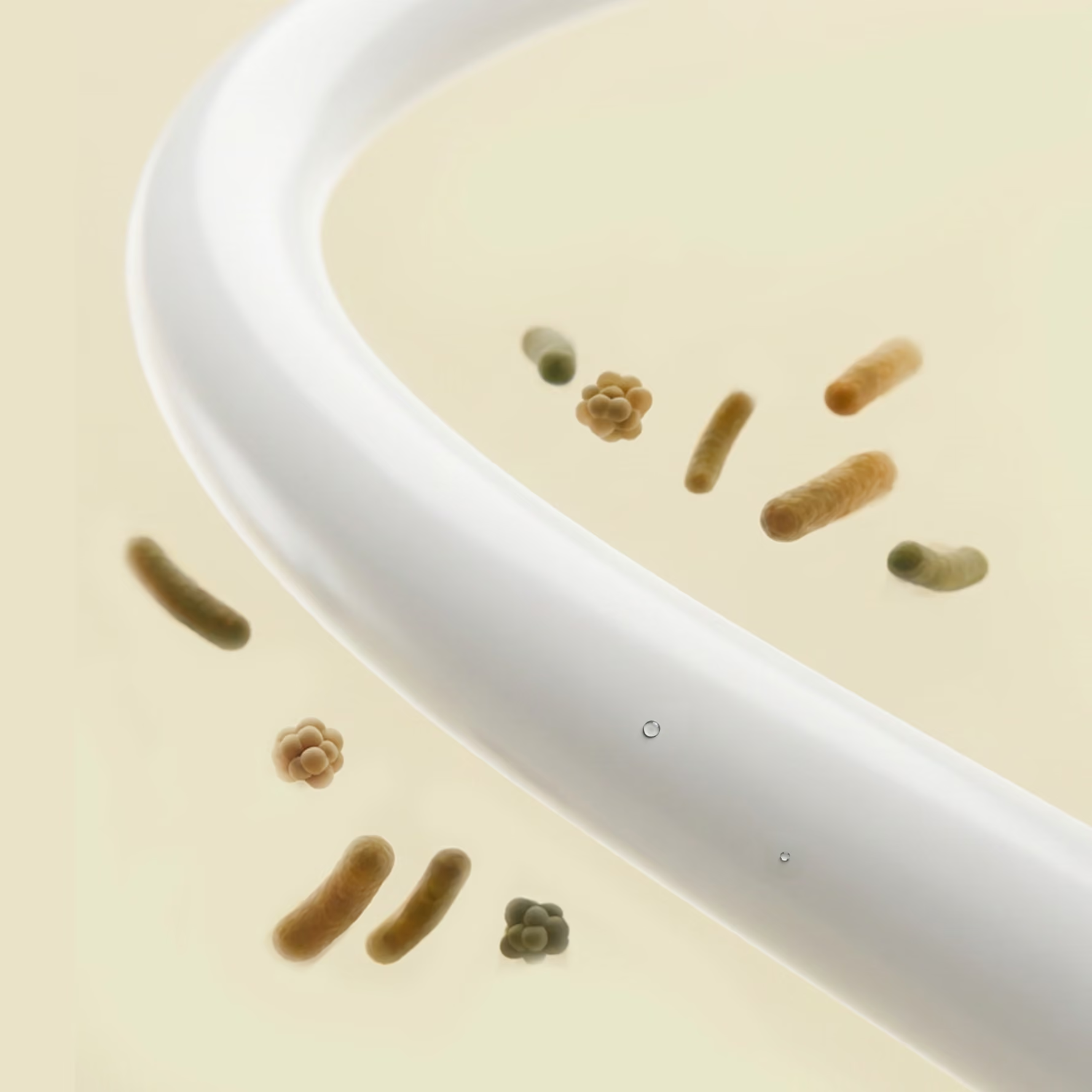
Types of medical device coatings
Medical device coatings are thin layers of functional material applied to surfaces to improve performance, safety, biocompatibility, or durability. Medical coatings are being applied to a variety of medical devices, from short-term contact devices, (needles, catheters, contact lenses) to long term contact devices (implants).
Hydrophilic and lubricious coatings
Coatings that improve lubricity, resist biofouling, and reduce bacterial adhesion
How hydrophilic coatings work
Hydrophilic coatings work by binding water. Polymers such as polyvinylpyrrolidone (PVP) and polyethylene glycol (PEG) carry groups that attract water molecules and hold them at the surface, forming a thin lubricating layer between the device and the tissue. The moment the device is wetted, friction drops sharply. Lower insertion force means less tissue trauma and a more comfortable experience for the patient.
Where hydrophilic coatings are used
Hydrophilic coatings are standard on devices that have to track through anatomy. In each case the coating is activated by wetting immediately before use, and the drop in insertion force is what makes the device workable in practice.
- Catheters (cardiovascular, urology, neurovascular)
- Stents
- Endoscopes
Known considerations
There is one consideration the industry has been working on. Because these coatings are applied as a polymer layer on top of the substrate, the bond between coating and device matters a great deal. Where adhesion is imperfect, or where a device makes repeated passes through an introducer, parts of the coating can separate. The FDA has issued a safety communication on lubricious coating separation in intravascular medical devices, and hydrophilic polymer embolism is a recognized adverse event with a body of literature behind it. Under MDR, coating integrity and particulate generation form part of the evaluation a manufacturer has to document.
The LipoCoat alternative
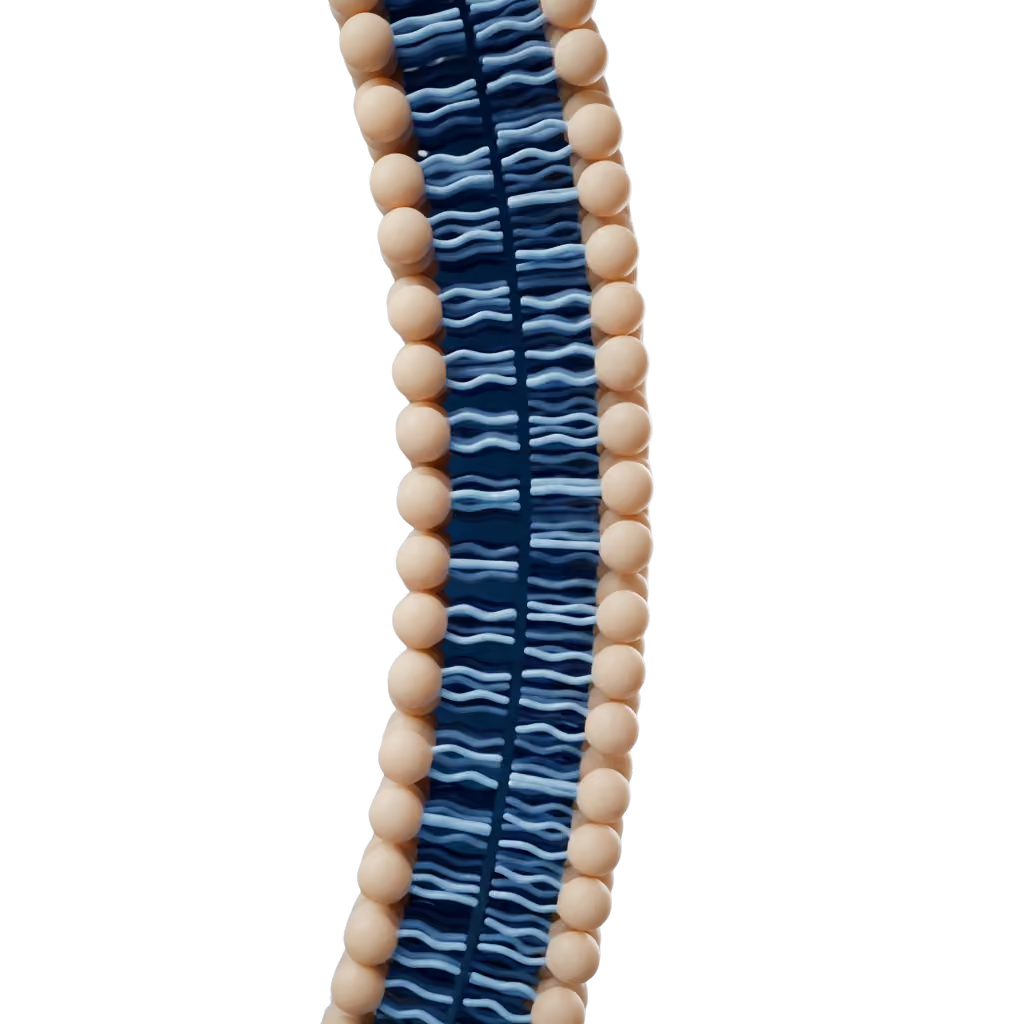
LipoCoat approaches lubricity differently. Rather than building a polymer film, it forms a phospholipid bilayer that binds at molecular level and is 5 nanometers thick. The hydration layer that makes the surface slippery is held by the polar headgroups of the lipids instead of by a polymer matrix, so there is no film that can delaminate or shed particulate. This is not a replacement for every hydrophilic coating; for some applications a thicker polymer layer remains the better engineering choice. Where coating integrity, particulate risk or PFAS exposure is the binding constraint, the bilayer is worth evaluating.
Antimicrobial and active coatings
Coatings that focus on infection prevention and biofilm reduction
How antimicrobial coatings work
Antimicrobial coatings act directly on micro-organisms at the device surface. They work in two ways. Leaching coatings release an active agent, such as silver ions, nitrofural, chlorhexidine or an antibiotic, into the immediate surroundings. Contact-killing coatings immobilize a biocide on the surface so that organisms are killed on contact rather than by release.
The reasoning behind them is sound. Any device that crosses the skin or sits in the urinary tract gives bacteria a surface to colonize, and colonization is the first step toward biofilm and toward a catheter-associated infection. An active coating attacks organisms that are already present, which a passive surface cannot do.
Where antimicrobial coatings are used
Antimicrobial coatings appear on indwelling urinary catheters using silver alloy or nitrofural, on central venous catheters impregnated with chlorhexidine and silver sulfadiazine or with minocycline and rifampicin, on antibiotic-loaded bone cement in orthopedic revision surgery, and on wound dressings containing silver. Guideline support varies by indication and by the strength of the evidence behind it.
Known considerations
Three considerations shape where they fit. Efficacy is indication-dependent and the evidence is mixed: in the largest randomized trial of its kind, 6,394 patients across UK hospitals, silver alloy-coated urinary catheters showed no reduction in symptomatic urinary tract infection compared with standard catheters, 12.5 percent against 12.6 percent, and nitrofural-impregnated catheters fell below the pre-specified threshold for clinical significance. Second, an active agent is a finite reservoir, so protection declines as it depletes. Third, sub-inhibitory concentrations at a surface are a recognized route to selection pressure, which is why antimicrobial resistance now features in the risk assessment for these devices. Devices incorporating a medicinal or biocidal substance also follow a longer conformity assessment route involving consultation with a medicines authority.
The LipoCoat alternative
LipoCoat works on the step before. It contains no antibiotics and no biocides, and it prevents adhesion rather than killing what has already adhered. Nothing depletes, so performance does not decline over the life of the device, and because nothing is released there is no selection pressure and no ancillary-substance route to navigate. Where the clinical need is to kill organisms that are already present, an antimicrobial device remains the right tool. Where the need is to stop colonisation from starting, a passive barrier does that job without the trade-offs.
Fluoropolymer and silicone coatings
Synthetic coatings that improve the properties of medical devices.
How fluoropolymer and silicone coatings work
Fluoropolymers such as PTFE deliver one of the lowest coefficients of friction available in any engineering material, together with chemical inertness and thermal stability. Silicone provides a comparable lubricating film through a different route, and both are applied by well-established processes with decades of validated manufacturing behind them.
They are used where that performance is hard to match. PTFE liners and coatings on guidewires, hypotubes, mandrels and needle cannulae reduce insertion and withdrawal force. Silicone reduces needle penetration force and is applied to syringe barrels and stoppers so that the plunger moves smoothly. For a manufacturer, part of the appeal is maturity: the processes are known, the suppliers are established and the material behaviour is fully characterised.
Where fluoropolymer and silicone coatings are used
PTFE is used as a liner and outer coating on vascular guidewires, hypotubes and mandrels, and on needle cannulae to reduce penetration force. Silicone is applied to hypodermic and suture needles for the same reason, and to syringe barrels and stoppers so that the plunger moves smoothly. Fluoropolymers also appear in vascular grafts and in filtration and sealing components.
Known considerations
Two things are changing the calculation. The European universal PFAS restriction, submitted in January 2023 by five member states and covering more than 10,000 substances, reached its RAC final opinion in March 2026, with adoption anticipated in 2027. Medical devices are treated separately: proposed derogations give non-implantable devices and IVDs 18 months plus 5 years, and implantable devices 18 months plus 12 years. That is not an imminent ban, but it does turn a possibility into a scheduled date, and the derogation period is the window in which an alternative has to be qualified rather than merely selected. Separately, silicone oil migration is a known interaction in prefilled syringes containing biologics, where it can contribute to protein aggregation and subvisible particles.
The LipoCoat alternative
LipoCoat contains no fluorinated or halogenated compounds and no silicones. It is applied as a 5-nanometer bilayer by single-step dip coating at ambient temperature, so it introduces no new PFAS exposure into your technical file and no silicone into a fluid path. It is not a universal substitute: where an application depends on extreme chemical inertness, high-temperature stability or bulk material properties, a fluoropolymer remains the correct engineering choice. LipoCoat addresses the interaction between the device surface and tissue, blood and fluids, which is where most lubricity and fouling requirements actually sit.
Where LipoCoat® fits
LipoCoat® is a bio-inspired coating that mimics the phospholipid bilayer of the human cell membrane. It binds at molecular level from 5 nanometers, forms a hydration layer that reduces adhesion of proteins and bacteria, and contains no PFAS, silicones or active pharmaceutical ingredients. It fits devices where coating integrity, particulate risk or material restrictions weigh heavily, and it sits alongside conventional coatings rather than replacing all of them.
Compare the mechanical and biological properties with existing industry standards in the comparison table.
A medical device coating proven across three device families

Tailored to your specific application
Whether you need a thinner, smoother finish, or enhanced wettability and lubricity, we understand that every application has unique requirements. Thanks to the LipoCoat® platform technology, we can tailor our coatings to your exact specifications without altering the device's underlying mechanical properties or dimensions.

Catheters
LipoCoat catheter products provide a passive and drug-less solution to reduce biofilm formation, improve blood compatibility and prevent tissue damage.
Needles
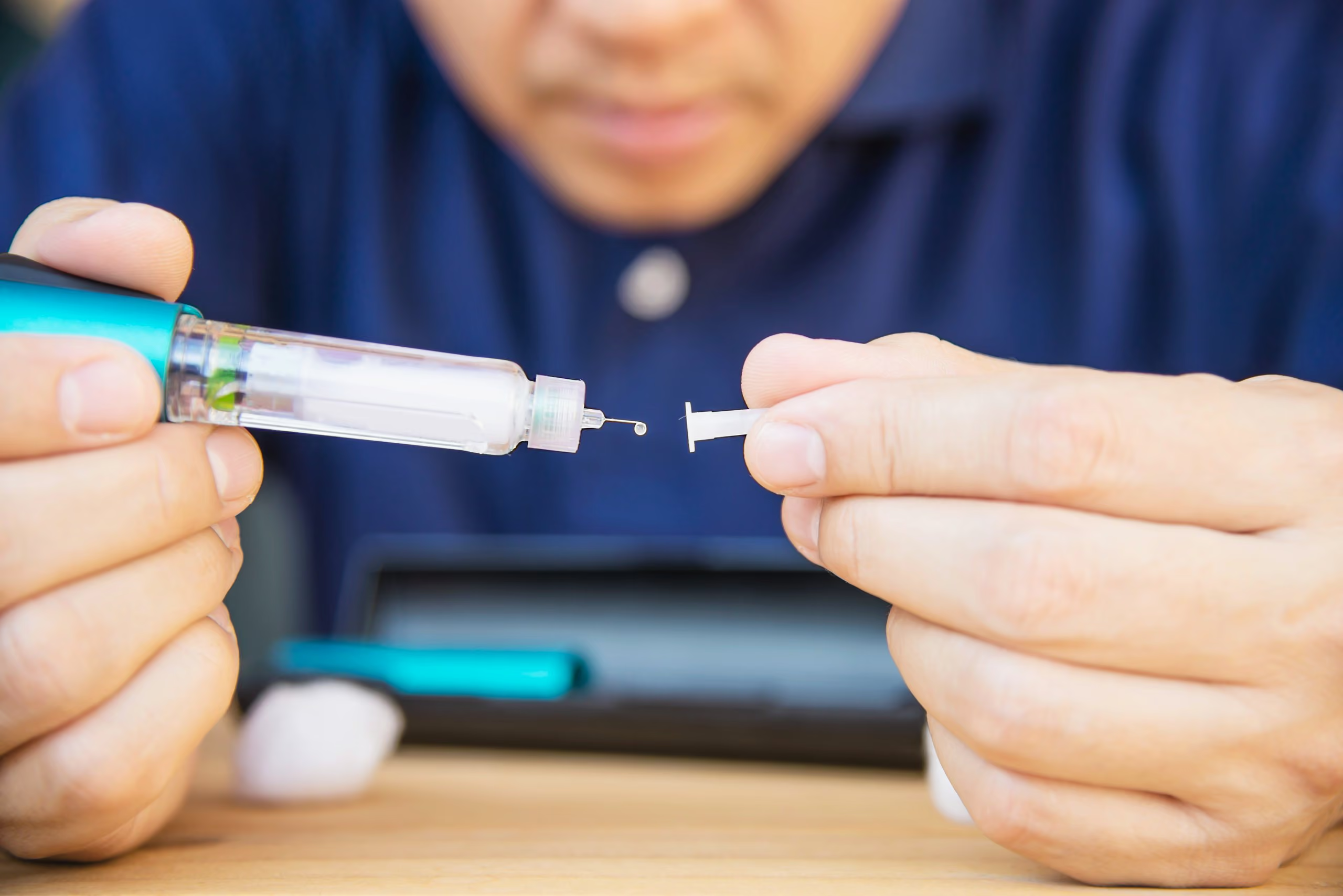
LipoCoat is the biological alternative to (traditional) silicone coating used on needles.
Contact Lenses
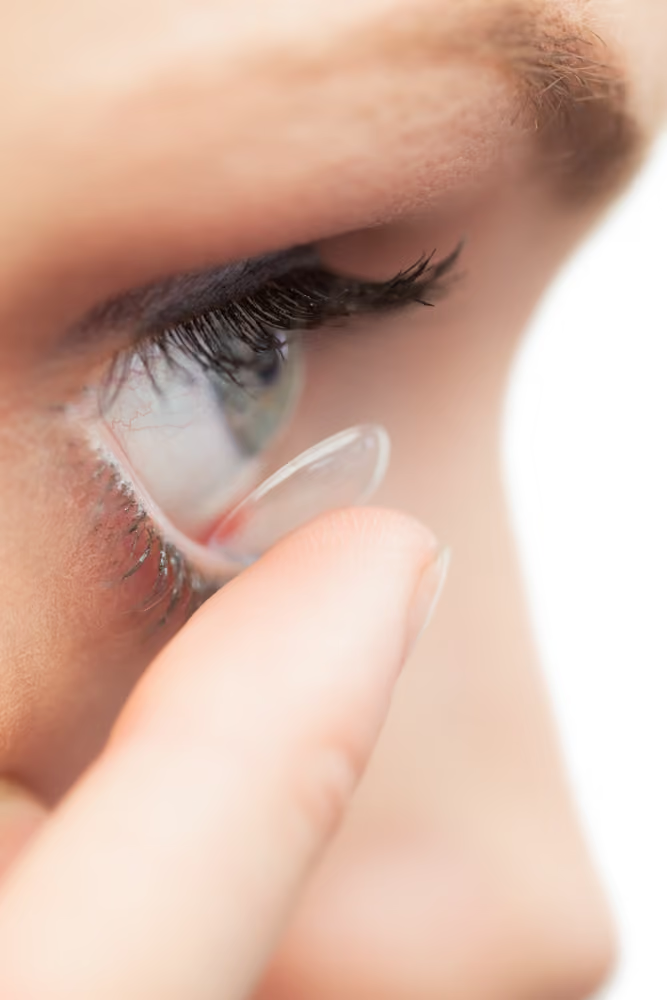
LipoCoat contact lens products are aimed at improving comfort and safety properties of the contact lens materials by increasing surface wetting, increasing surface lubricity and reduce surface contamination by reducing deposits and bacterial build-up on the lens material.
Medical device coating specifications

Anti-fouling defense
Compared to uncoated control samples, LipoCoat®-treated surfaces sustained near-complete inhibition of biofilm formation for up to 29 days under continuous exposure. Full method available on request

Bio-Inspired medical coating technology
LipoCoat works purely as a passive physical/chemical barrier to prevent pathogen and protein fouling, eliminating the risks of chemical toxicity or antimicrobial resistance.
FAQ
Questions manufacturers ask when they compare coatings for a device.
Traditional medical coatings typically rely on thick synthetic polymer matrices (such as PVP or PTFE) or active leaching biocides (such as silver ions or antibiotics). In contrast, LipoCoat® is a bio-inspired technology that mimics the natural phospholipid bilayer of human cell membranes. At a nanoscale thickness from 5 nanometers, it turns the device surface into a passive anti-fouling interface that reduces adhesion of proteins, platelets and bacteria.
The nanoscale structure is a major engineering advantage. The hydrophilic headgroups of the phospholipid bilayer attract water molecules and form a dense, stable hydration layer. Because LipoCoat® is bound at the molecular level rather than applied as a thick, brittle polymer film, it is designed to minimise delamination, cracking and particulate generation (flaking), a common point of failure flagged in FDA safety alerts for traditional lubricious coatings. Particulate behaviour is verified for your device and substrate during testing.
The LipoCoat® technology platform offers universal surface compatibility across a broad spectrum of medical materials, including:
Polymers: Polyurethane (PU), Polyvinyl Chloride (PVC), Silicone, PEBAX, PEEK, Nylon, Hydrogels, and Silicon-hydrogels.
Rigid Substrates: Rigid Gas Permeable (RGP) contact lens materials and metallic/ceramic components.
Primary device applications include central venous catheters (CVCs), peripherally inserted central catheters (PICCs), Foley/urological catheters, contact lenses, vascular access sheaths, and implantable medical components.
Because LipoCoat® is applied at a nanoscale thickness, it has virtually no impact on the mechanical specifications, wall thickness, outer diameter (OD), inner diameter (ID) or fluid flow dynamics of your device. Parameters such as tensile strength, pushability, trackability and lumen flow rate are designed to remain unchanged, and dimensional impact is confirmed on your device during feasibility testing.
The coating is evaluated as part of your device rather than separately. We supply the ISO 10993-1 test package, covering cytotoxicity, sensitization, intracutaneous reactivity, acute and systemic toxicity, pyrogenicity and hemocompatibility, to support your biological evaluation. Because the coating contains no medicinal or biocidal substance, it does not move your device into the ancillary substance route. Whether the change itself requires a notification or a new submission depends on your device and the scope of the change, and that is a call for your regulatory team.
LipoCoat® has been evaluated according to ISO 10993, including cytotoxicity (ISO 10993-5), intracutaneous reactivity, sensitisation, acute and systemic toxicity, pyrogenicity, and haemocompatibility (ISO 10993-4). Because it contains no antibiotics or biocides, nothing leaches into surrounding tissue and there is no mechanism through which the coating drives antimicrobial resistance (AMR).
Still have questions?
Please contact us to discuss your project.